

The Future of Advertising: Owned Media Networks


Advertising has changed dramatically in recent years. Consumers are fed up with irrelevant ads, costs are climbing, and privacy regulations are tightening. It’s clear—brands can’t keep relying on third-party platforms to drive their marketing. If you want to stand out, you need to take control. That means focusing on owned media networks, and the backbone of any successful owned media strategy is your website.
The Power of Owned Media
When we talk about owned media, we’re talking about the assets that your brand owns and controls—your website, email lists, mobile apps, social media channels, and the data that comes from them. The advantage here is clear: you don’t need to rely on platforms like Google or Facebook to reach your audience. Instead, you own the data, the relationship, and the communication with your audience.
Shifting from third-party ads to owned media gives you full control over the content you create, the relationships you build with customers, and, most importantly, your data. In a marketplace where these factors are becoming more important than ever, it’s time to embrace owned media as the future of advertising.
Why Your Website is the Foundation of Owned Media
Your website is where it all starts. It’s the hub that connects everything. Sure, social media, email, and apps are essential, but your website is where everything comes together—the place that holds your brand’s identity, content, and data.
Here’s why your website is the cornerstone of a solid owned media strategy:
1. The Control Factor
When you own your website, you’re in the driver’s seat. You control the content, the messaging, and the entire customer experience. No more being at the mercy of algorithms from third-party platforms. You decide what your visitors see and how they interact with your brand. This level of control means you can deliver the most relevant, personalized content to your audience, exactly when they need it.
Your website is where your brand’s voice is most authentic. You can build meaningful relationships with your customers through the content you share, without interference from external platforms. This control is key as marketing continues to evolve.
2. The Data Source
First-party data is your goldmine. The data you collect through your website is the most valuable kind—it’s your customer’s own behaviors, preferences, and interactions. It’s accurate, it’s reliable, and it’s in your hands.
By tracking everything from page views to purchases, you gain deeper insights into what your customers want and need. This data allows you to optimize not just your advertising, but the entire customer experience. The more you know about your audience, the better your content, ads, and offers can be.
3. The Content Hub
Your website is your brand’s content engine. Blogs, videos, customer testimonials—everything you create lives on your website. Content is king in the world of owned media, and your website is where the strategy comes to life.
High-quality content does more than inform; it drives organic traffic, builds trust with your audience, and strengthens your SEO. The best part? Since you own this content, you aren’t subject to shifting algorithms from third-party platforms. Your website is where your content can thrive—on your terms.
4. The Customer Journey
Most customer journeys start on your website. Whether they’re coming through a search engine, a social media link, or an email, visitors ultimately end up on your site. And once they’re there, your website is the focal point where they can learn more, explore your products or services, and engage with your brand.
Your website isn’t just a digital brochure—it’s a key player in creating personalized, data-driven experiences. Think product recommendations based on past behavior or custom landing pages that speak directly to your visitors’ needs. Your website is the engine that powers the whole customer journey.
5. Brand Authority and Trust
Your website is often the first point of contact between your brand and a potential customer. If it’s well-designed, user-friendly, and packed with valuable content, it instantly builds credibility and trust. Your website is a representation of your brand, and it sets the tone for how customers perceive you.
When you consistently deliver high-quality content that adds value—whether it’s through blogs, product guides, or customer success stories—you’re showing visitors that your brand is an authority. A seamless, easy-to-navigate website creates a positive first impression and ensures visitors keep coming back.
Enhancing Organic Search and Paid Advertising with Owned Media
Here’s where things get really interesting: when done right, owned media can supercharge both organic search and paid advertising efforts.
Boosting Organic Search Performance
Your website, when optimized with keyword-rich, valuable content, is a serious asset for improving your organic search rankings. Google and other search engines reward websites that provide value, whether that’s through informative blogs, optimized landing pages, or in-depth product content. The more content you produce that aligns with what your customers are searching for, the more likely you are to show up on the first page of search results. And all of this traffic comes without spending a dime on paid ads.
Maximizing Paid Advertising ROI
Now, owned media can also make your paid ads work harder for you. The data you gather from your website gives you insights into exactly who your customers are and what they want. With this information, you can create targeted, personalized ads that speak directly to specific customer segments. This ensures that your paid ads aren’t just shots in the dark, but precision-targeted messages that convert.
And when your paid and organic efforts are working together—backed by the power of owned media—you’ve got a winning strategy that delivers maximum ROI.
The WSI Digital System Map: A Visual Guide to Building Owned Media Networks
If you’re wondering how this all comes together, we’ve created the WSI Digital System Map. It’s a visual tool that shows how we help brands like yours build and scale their owned media networks. It outlines where we integrate your website into a broader marketing strategy—turning it into the central hub that drives customer engagement and long-term growth.
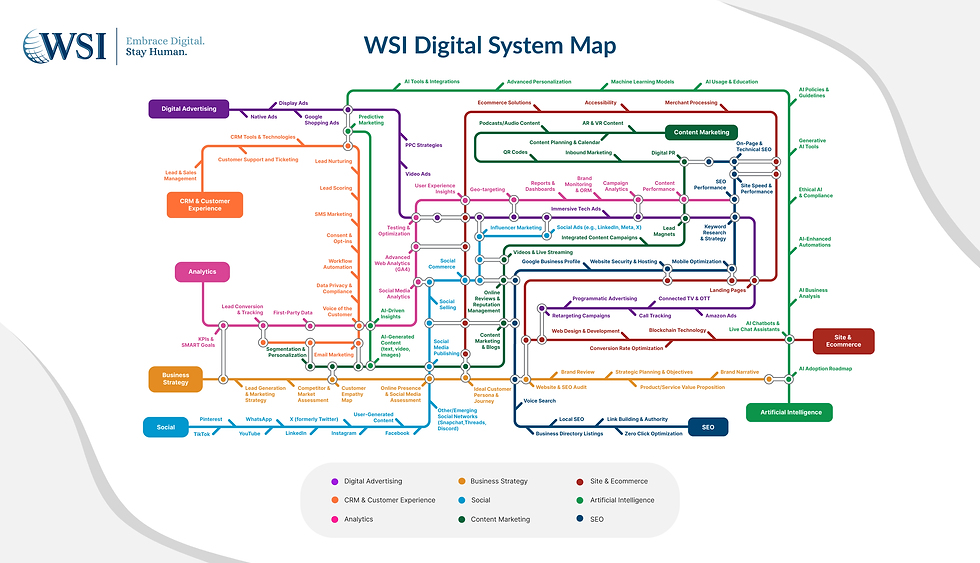
This system shows how to leverage your website, email lists, social media, and other owned channels to build a cohesive and scalable marketing ecosystem. With this approach, you’re not just managing a website—you’re building a powerful owned media network that keeps working for you.
The Importance of Building Your Owned Media Network
While your website is the foundation, the key to a successful owned media strategy is creating a connected ecosystem. Your website, email marketing, social media, and mobile apps should all work together seamlessly to engage customers and drive value.
Empowered Customer Relationships
Owned media allows you to engage with customers directly—without relying on intermediaries. Through personalized email campaigns, loyalty programs, and relevant content, you can build lasting relationships that drive customer loyalty and repeat business.
Cost Efficiency
When you own your media, you reduce the need to rely on expensive third-party platforms. Organic search, email, and content marketing are much more cost-effective than constantly paying for ads. With owned media, your focus shifts to long-term growth, and you get better returns on your efforts.
Personalized Customer Experiences
By leveraging the data from your website and other owned channels, you can create highly personalized experiences for your customers. Whether that’s offering tailored product recommendations or sending targeted content, personalized marketing leads to more meaningful interactions, better conversion rates, and higher customer satisfaction.
Sustainability and Long-Term Growth
The real beauty of owned media is its ability to grow and scale over time. As you accumulate more data, refine your content, and optimize your website, your owned media ecosystem becomes stronger, and your brand’s digital presence grows. Unlike rented media, your owned assets aren’t subject to algorithm changes or price hikes—they’re yours to control.
Conclusion
As advertising costs rise and third-party platforms become more crowded, owning your own media network is no longer optional. And at the heart of this strategy is your website. Your website is the foundation of a customer-first marketing approach that lets you build deeper relationships, gather valuable data, and create personalized experiences that boost both organic search and paid ad performance.
By embracing owned media and ensuring your website is the central hub of your strategy, you’re building a sustainable, scalable, and customer-centric approach to advertising.


Comments